

Title: Evaluating the ROI of Chatbots for Niche Market Websites: A Friendly Guide
In the bustling digital marketplace, standing out can feel like finding a needle in a haystack. For niche market websites, the challenge is even more pronounced—capturing the attention of a specific audience while simultaneously providing exceptional customer service. Enter the unsung hero of modern business: the chatbot. Imagine having a virtual assistant at your fingertips, ready to engage visitors, answer questions, and even guide them toward making a purchase. It’s like having a friendly shopkeeper standing by, day or night, ready to assist—all while keeping operational costs in check. But is it worth the investment? In this article, we’ll take a friendly dive into the world of chatbots, exploring how to evaluate their return on investment (ROI) specifically for niche markets. Let’s unravel the mysteries behind the numbers and discover how these digital companions can transform customer interactions and boost your bottom line!
Understanding the Unique Needs of Niche Markets When Choosing Chatbots
When selecting chatbots for niche markets, it’s essential to recognize that these markets often possess distinct characteristics and unique customer expectations. Unlike broader markets, niche audiences typically seek more personalized interactions and solutions that cater specifically to their needs. This means that the functionality and design of chatbots must not only align with brand identity but also resonate deeply with the targeted customer base. Ideally, the chatbot should be able to:
- Understand industry-specific terminology to enhance engagement.
- Offer tailored recommendations based on unique user profiles.
- Foster community engagement by creating a conversational tone that reflects niche interests.
Additionally, considering the technical capabilities of a chatbot is crucial, especially when dealing with specialized products or services. Advanced features such as natural language processing (NLP) can significantly improve user experience, allowing for more fluid and intuitive conversations. It’s also vital to assess the integration capabilities of chatbots with existing systems, as seamless connectivity can streamline operations. Here’s a simple comparison table to demonstrate relevant factors to consider:
| Factor | Importance | Example Application |
|---|---|---|
| Customization | High | Tailored greetings and suggestions |
| NLP Capabilities | Medium | Understanding complex queries |
| Integration | High | Connecting to CRM or eCommerce platforms |

Measuring Success: Key Metrics for Analyzing Chatbot Performance
When assessing the efficacy of chatbots for niche market websites, several key metrics can provide invaluable insights into their performance. User engagement is crucial, as it demonstrates how often users interact with the chatbot. This can be tracked through metrics such as:
- Interaction Rate: The percentage of visitors who engage with the chatbot.
- Session Length: Average time users spend interacting with the bot.
- Message Count: Total number of messages exchanged between users and the bot.
In addition to engagement, understanding how well the chatbot meets users’ needs is fundamental. To gauge this, you can analyze conversion metrics. These include:
- Lead Generation: The number of leads captured through chatbot interactions.
- Sales Conversion Rate: The percentage of chatbot interactions that result in a sale.
- Customer Satisfaction Score: Post-interaction surveys measuring user satisfaction.
To summarize these key metrics, a structured table can help visualize the data:
| Metric | Description | Importance |
|---|---|---|
| Interaction Rate | Percentage of users engaging with the chatbot | High |
| Lead Generation | Number of leads collected through chats | High |
| Sales Conversion Rate | The ratio of leads to completed sales | Very High |
| Customer Satisfaction Score | User feedback on chatbot experience | High |
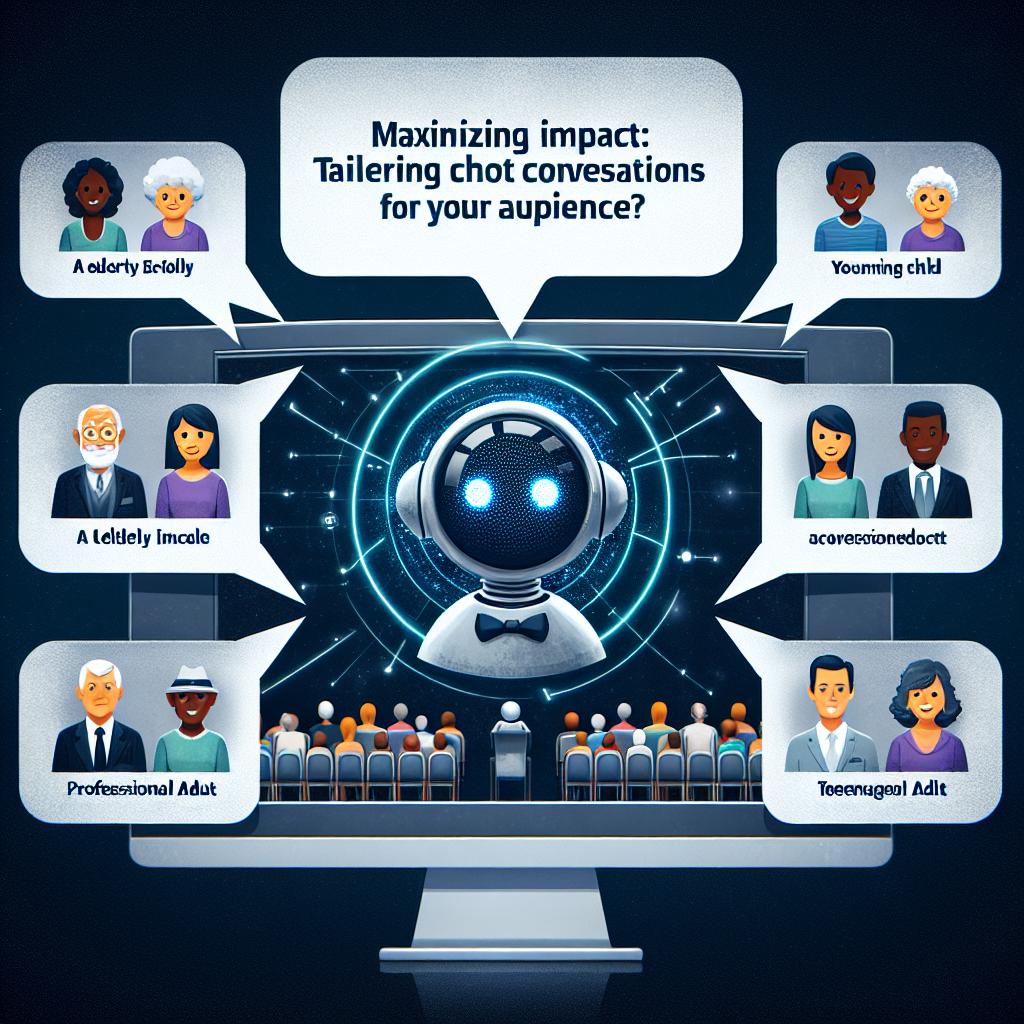
Maximizing Impact: Tailoring Chatbot Conversations for Your Audience
To truly engage your audience, it’s essential to personalize conversations with your chatbot to reflect the unique interests and preferences of your users. By leveraging data analytics and user feedback, you can identify common pain points and questions specific to your niche market. Consider implementing the following strategies to enhance user interactions:
- Segment Your Audience: Create tailored conversation paths for different user groups based on their behaviors and demographics.
- Use Conversational Tone: Choose a friendly, relatable language that resonates with your audience, making the interaction feel natural.
- Incorporate Contextual Awareness: Utilize past interactions and user history to create a more relevant conversation, remembering past purchases or preferences.
Moreover, implementing feedback loops is crucial for ongoing optimization. Collect feedback at the end of chatbot interactions to refine its capabilities continuously. Here’s a simple technique to evaluate user satisfaction:
| Feedback Category | Rating Scale (1-5) |
|---|---|
| Relevance of Answers | 4.2 |
| Response Time | 4.7 |
| User Engagement | 4.5 |
| Satisfaction with Experience | 4.8 |
By consistently assessing these metrics, you can adjust your chatbot’s conversational style to maximize engagement and deliver a remarkable user experience tailored specifically for your audience.

Balancing Costs and Benefits: Making the Case for Chatbots in Specialty Markets
In niche markets, where customers often seek specialized knowledge and personalized assistance, integrating chatbots can significantly enhance user experience while managing operational costs effectively. Chatbots can handle a vast number of customer inquiries 24/7, ensuring that users receive immediate responses even outside of business hours. The result? Increased customer satisfaction and loyalty, leading to potential long-term revenue growth. Moreover, employing chatbots can reduce the burden on human staff, allowing them to focus on more complex issues that require a personal touch. This not only improves productivity but also helps in optimizing labor costs in the long run.
When assessing the financial impact of chatbot implementation, it’s crucial to consider both direct and indirect benefits. Here are some key factors to evaluate:
- Cost Savings: Less reliance on customer service representatives reduces operational costs.
- Increased Sales: Chatbots can guide customers through the sales funnel, potentially increasing conversion rates.
- Data Collection: Bots can gather valuable customer insights, informing marketing strategies.
- Scalability: As businesses grow, chatbots can easily be scaled to meet increasing demands.
| Benefit | Impact on ROI |
|---|---|
| Reduced Response Time | Higher customer retention |
| 24/7 Availability | Increased sales opportunities |
| Personalization | Improved customer satisfaction |
The Conclusion
assessing the ROI of chatbots for niche market websites isn’t just about numbers and metrics; it’s about understanding the profound impact these digital conversationalists can have on your audience’s experience and your business’s growth. As we’ve explored, integrating a chatbot can streamline operations, enhance customer satisfaction, and ultimately contribute to your bottom line in ways that might surprise you.
So, whether you’re a budding entrepreneur in a niche market or a seasoned pro looking to optimize your customer engagement, the potential of chatbots shouldn’t be overlooked. Embrace the curiosity that drove you to explore this technology, and give it a test drive! By thoughtfully evaluating your specific needs and goals, you can turn your chatbot from a simple tool into a valuable team member.
Now, go ahead—unlock the future of customer interaction and watch as your niche website transforms into a vibrant hub of engagement and efficiency. Here’s to happy chatting and prosperous returns! 🌟